When the country that once illuminated the world with science began dimming its own creative flame
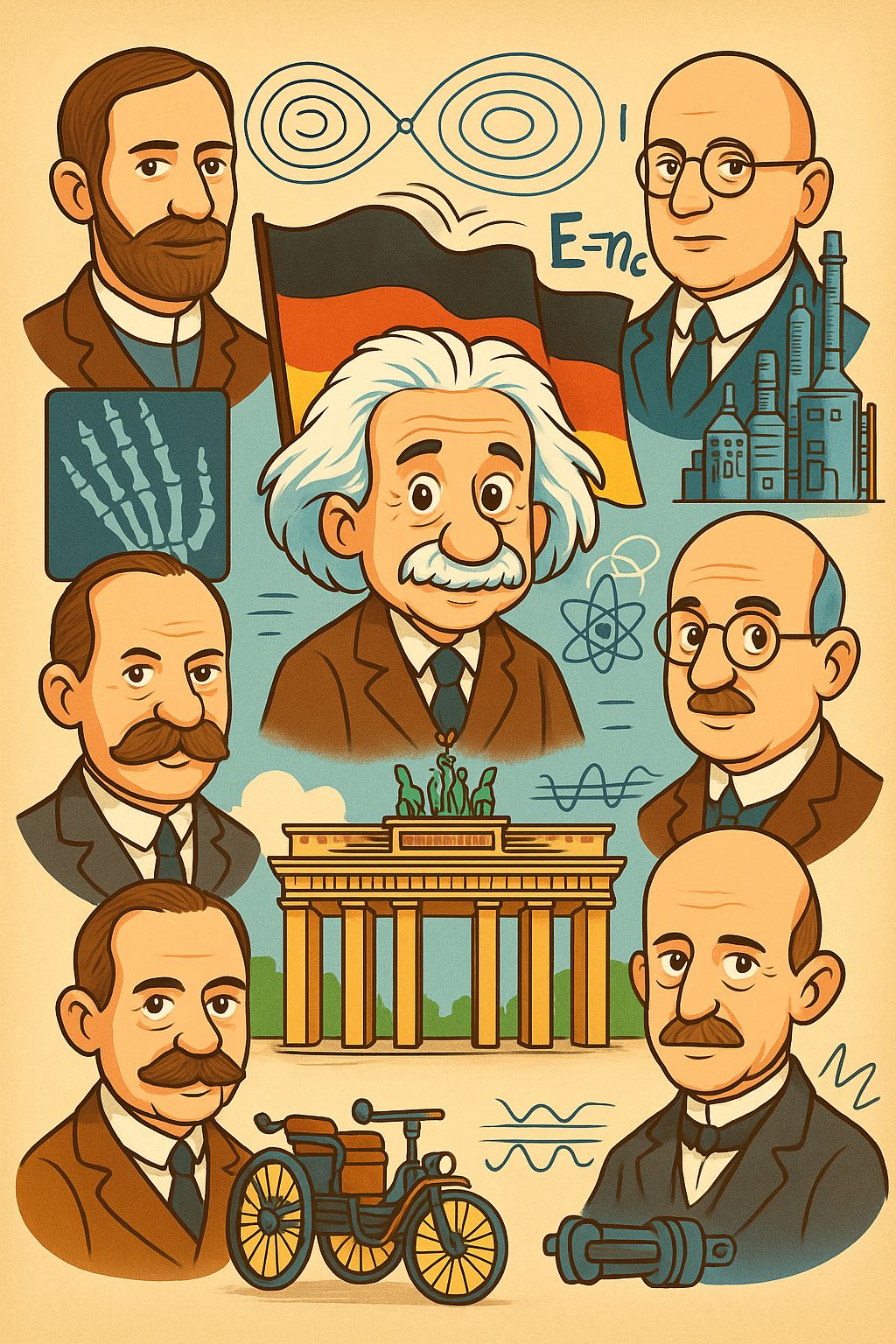
During the 19th and early 20th centuries, Germany was one of the beating hearts of human genius. In just a few generations, it produced a constellation of transformative minds:
- Wilhelm Conrad Röntgen revealed X-rays to the world,
- Heinrich Hertz unlocked electromagnetic waves, opening a new era in modern medicine.
- Carl Bosch and Fritz Haber reshaped agriculture,
- and Albert Einstein redefined the laws of the universe.
- Karl Benz set the world in motion,
- Rudolf Diesel powered it,
- Max Planck opened the quantum door.
These names remind us of a time when science was an act of courage and curiosity, when ideas were valued not by their utility, but by their capacity to expand the human mind.
The Silent Turn: From Freedom to Limitation
But the 21st century has brought a quieter Germany - one where innovation whispers instead of roars. A system once open to exploration has become more standardized, cautious, and managerial. Creativity, that uncertain but essential spark, has been replaced by efficiency and compliance.
Today, the country leads in precision, but not always in imagination. Its universities excel in applied research, but struggle to nurture boldness. Many of its brightest minds look abroad, not for comfort, but for (intellectual) freedom.
The Pedagogy of Obedience
Germany’s educational model, still deeply technical and hierarchical, prizes mastery over imagination. Students learn to execute, not to question. Failure, the true birthplace of creativity, is feared more than ignorance itself. This produces brilliant engineers, but few visionaries. It forgets that Einstein was once dismissed, Planck doubted, and Hertz never lived to see what he had started. Genius thrives where doubt is allowed, not where conformity is rewarded.
The Future of German Generations
The next generation faces a choice: to preserve the comfort of order or to rediscover the courage to think differently. This is not just Germany’s dilemma, but the challenge of every modern society built on systems rather than spirit.
If the country can revive its tradition of questioning, it could once again illuminate the world.
There is no greatness without invention, and no invention without freedom.
The creative fire that once shone from Germany has not died, it merely waits. For a new generation, unafraid to fail, to strike the match again.