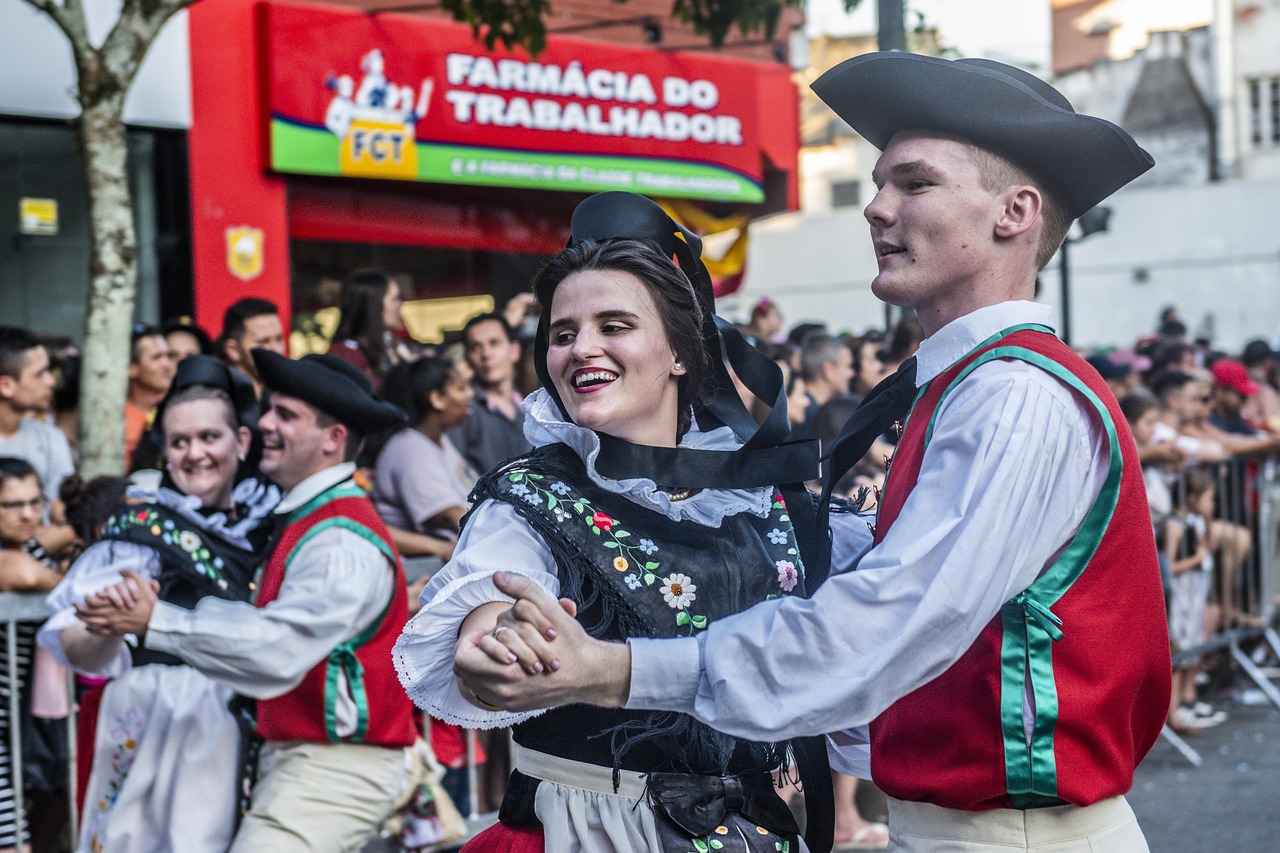
When people think of German culture, they imagine Munich, Berlin, or the Brandenburg Gate on Tag der Deutschen Einheit. But in Santa Catarina, southern Brasil, there is a city where German traditions are still alive: Blumenau.
The Founding of Blumenau
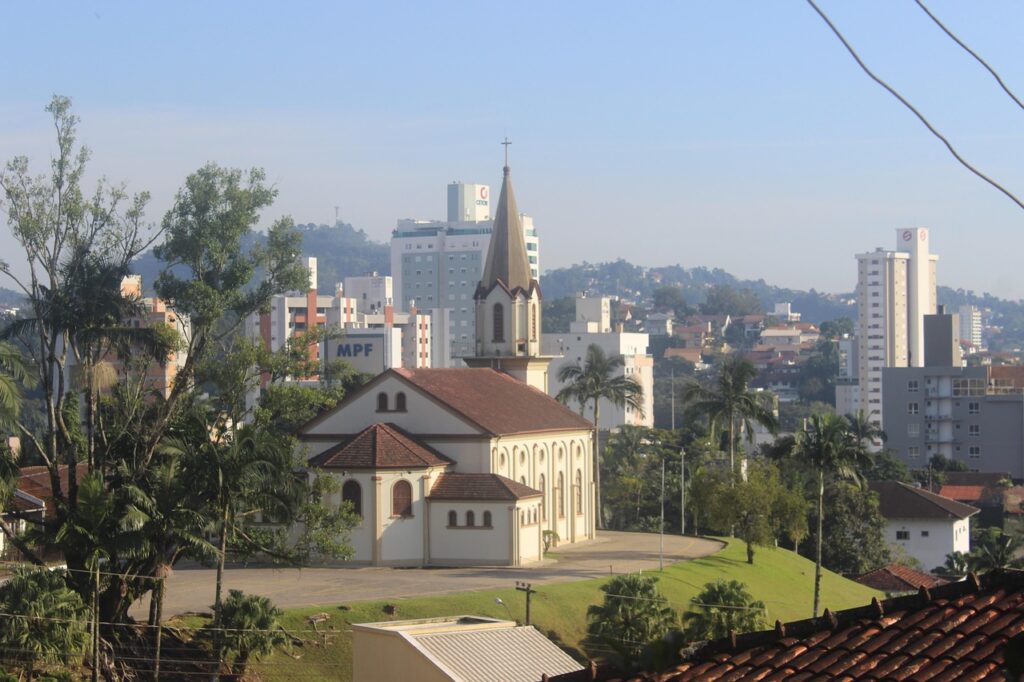
Blumenau was founded on September 2, 1850 by the German pharmacist Hermann Bruno Otto Blumenau and a group of seventeen settlers. They chose a spot along the Itajaí-Açu River, in a fertile valley surrounded by dense forests. At the time, the region was inhabited by the indigenous Xokleng people, who were gradually displaced as the colony expanded. Life for the Germans was far from easy. They battled tropical diseases, floods, and isolation while trying to build farms and homes.
By 1880, Blumenau had grown large enough to become a municipality. German-style half-timbered houses, Lutheran churches, and festivals turned it into what many called a “little Germany” in South America.
Population Growth and Identity
From fewer than twenty settlers in 1850, Blumenau has grown into a modern city with about 365,000 inhabitants today. Thirty years ago, in 1990, the population was just above 200,000, and a century ago in the 1920s, it was still a small, largely rural settlement.
The city’s population remains strongly of German descent, but Italian and other European immigrants also arrived in later waves. Today, Blumenau is about 79% White, 17% mixed race, and 4% Black. Religiously, both Catholic and Protestant communities are significant, reflecting a blend of Brazilian and German traditions.
Conflicts and Challenges
The city’s history includes cultural tensions. During Brazilian nationalization campaigns in the 1930s and during WW2, German schools were closed, and the use of the German language was restricted. Yet German culture endured, and in 2024, Blumenau even adopted German as a complementary official language, alongside Portuguese.
Nature has also been a challenge. The Itajaí-Açu River has flooded the city repeatedly, with catastrophic floods in 1983, 1984, and 2008 leaving deep scars. These disasters shaped urban planning and remain part of the local memory.
Modern Life in Santa Catarina’s German Heart
Today, Blumenau is one of Santa Catarina’s most dynamic cities. Its economy is powered by the textile industry (with brands like Hering and Karsten), a growing technology sector, and tourism. The annual Oktoberfest Blumenau is the second-largest in the world after Munich, attracting hundreds of thousands of visitors. German-style architecture, bakeries selling pretzels and strudel, and chope (draft beer) gardens keep traditions alive. Universities and research centers also make it an educational hub in southern Brasil.
A Living Bridge Between Germany and Brasil
Blumenau is more than a German curiosity in Santa Catarina—it’s a city that shows how migration shapes culture. While Germans celebrate Tag der Deutschen Einheit in Europe, their descendants in Brasil celebrate their heritage at Oktoberfest. In both places, the story is one of unity, resilience, and the blending of traditions that cross continents.