
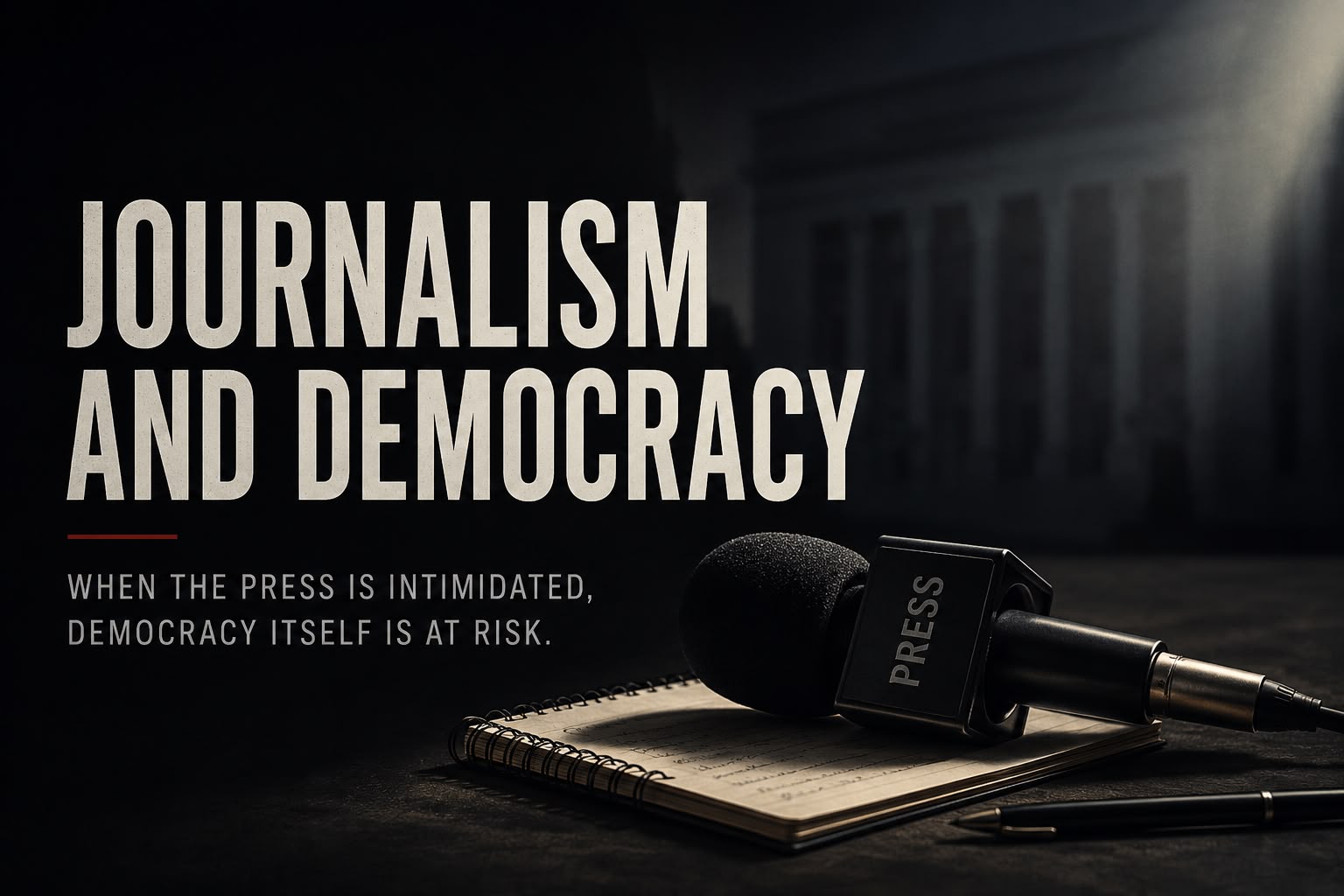
When the press is intimidated, democracy itself is at risk.
Democracy is more than elections.
It depends on transparency, accountability and the freedom to question those who exercise power. Journalism is an essential part of that foundation.
A free press allows society to examine governments, corporations, institutions and other centers of power. Journalists investigate, ask questions and bring matters of public interest into the public sphere - including facts that some would prefer to remain unseen.
Sometimes, that work comes at an extraordinary cost.
According to UNESCO, more than 1,800 journalists have been killed worldwide since 1993 in connection with their work.
Brazil has witnessed some of the most disturbing examples of violence against journalists.
In 2002, award-winning investigative journalist Tim Lopes, from TV Globo, was kidnapped and brutally murdered while working on an investigation in Vila Cruzeiro, Rio de Janeiro. He was carrying a hidden camera and investigating parties allegedly involving drug trafficking and the sexual exploitation of minors.
Six years later, in 2008, a team from the newspaper O Dia working undercover in Batan, in Rio de Janeiro, was kidnapped by armed men. Two journalists and their driver were beaten, subjected to electric shocks, suffocated with plastic bags and threatened with death. They were held for approximately seven hours before being released.
These are extreme cases.
But attacks on press freedom do not begin only with physical violence.
They can begin with threats, harassment and intimidation intended to create fear around the simple act of investigating, questioning or publishing.
Disagreement with journalism is part of a free society. Intimidation of journalists is not.
When journalists are afraid to ask the next question, society risks never hearing the answer.
Press freedom is therefore not merely about protecting journalists. It protects everyone’s right to know what those in positions of power are doing.
When the press is intimidated into silence, democracy loses one of its essential safeguards.
A free press protects more than journalism. It protects democracy.
Sources:
* UNESCO - Safety of Journalists: Facts and Figures - Source for the figure of more than 1,800 journalists killed since 1993. A versão da página com “Facts and Figures” explicita “1,800+ journalists killed since 1993”.
* UNESCO - Observatory of Killed Journalists - UNESCO’s database of journalists killed in connection with their work since 1993. A base atualmente lista 1,870 records.
* Committee to Protect Journalists - Tim Lopes - Detailed CPJ record of the murder of Brazilian investigative journalist Tim Lopes and the investigation he was working on.
* Committee to Protect Journalists - Batan / O Dia - Contemporary CPJ account of the kidnapping and torture of two O Dia journalists and their driver while they were investigating militia activity in Batan, Rio de Janeiro, in 2008.