
Why was blue once so rare?
Today blue feels everywhere, in jeans, corporate logos, and everyday objects. But for most of human history, blue was a rarity. Unlike earthy reds, browns, and blacks that came easily from natural pigments, blue was elusive. The sky and the sea were vast fields of blue, yet the color itself seemed almost impossible to capture.
How was blue created in the past?
The first true blue pigment, Egyptian blue, was invented over 4,000 years ago. Crafted from crushed limestone, sand, and copper, it required skill and high heat to produce. Centuries later, the most prized blue of all emerged: ultramarine, made by grinding lapis lazuli from mines in Afghanistan. It was so precious in medieval Europe that it cost more than gold. Artists reserved it for the holiest subjects, often the robes of the Virgin Mary, turning blue into a symbol of the divine.
Why does blue feel so powerful?
Blue carries a paradox: it is calming, yet infinite. It is the color of still water, but also of endless oceans. It suggests serenity, but also mystery. Psychologists say it lowers heart rate and invites trust, yet poets and painters have long used blue to express longing, distance, and the unknown.
What does blue mean to us today?
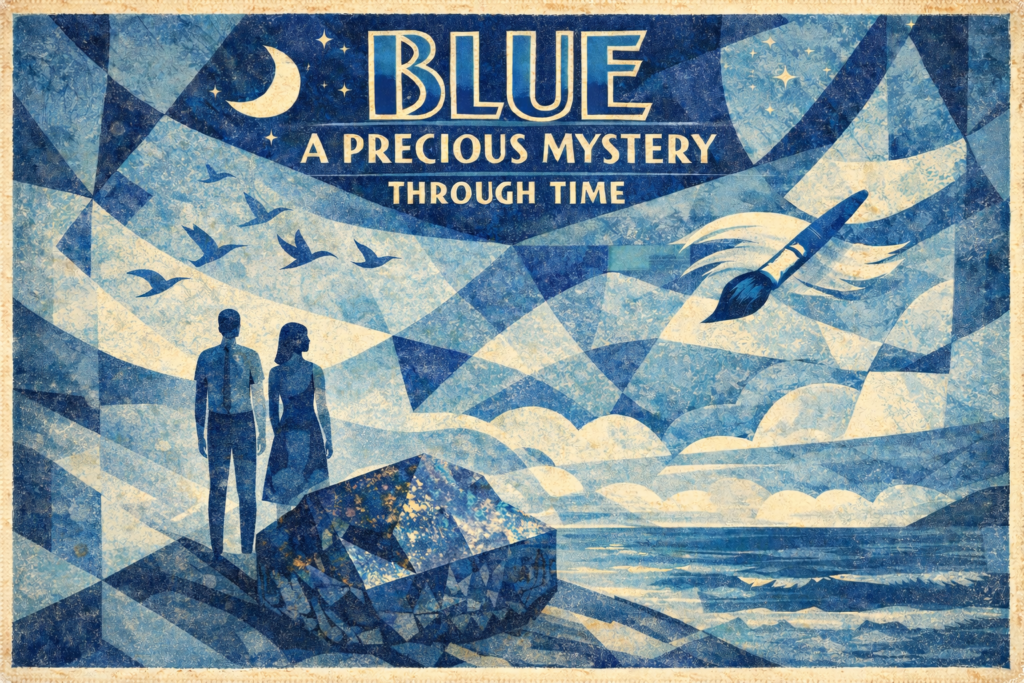
Even now, blue carries an aura of preciousness and depth. Navy blue signals authority, sapphire and turquoise are treasured gemstones, and indigo dye once fueled entire trade routes. From the stained-glass windows of Gothic cathedrals to the ultramarine skies of Renaissance paintings, blue has always stood apart as a color of wealth, spirituality, and wonder.
A timeless fascination
Every shade of blue tells a story: of artisans grinding stone for pigment, of traders guarding rare dyes, of painters elevating their subjects with a touch of sky. What was once rare and almost magical is now common, but the sense of mystery remains. Blue is more than a color; it is a reminder of how humans have always reached for the impossible and tried to capture the beauty of the horizon.