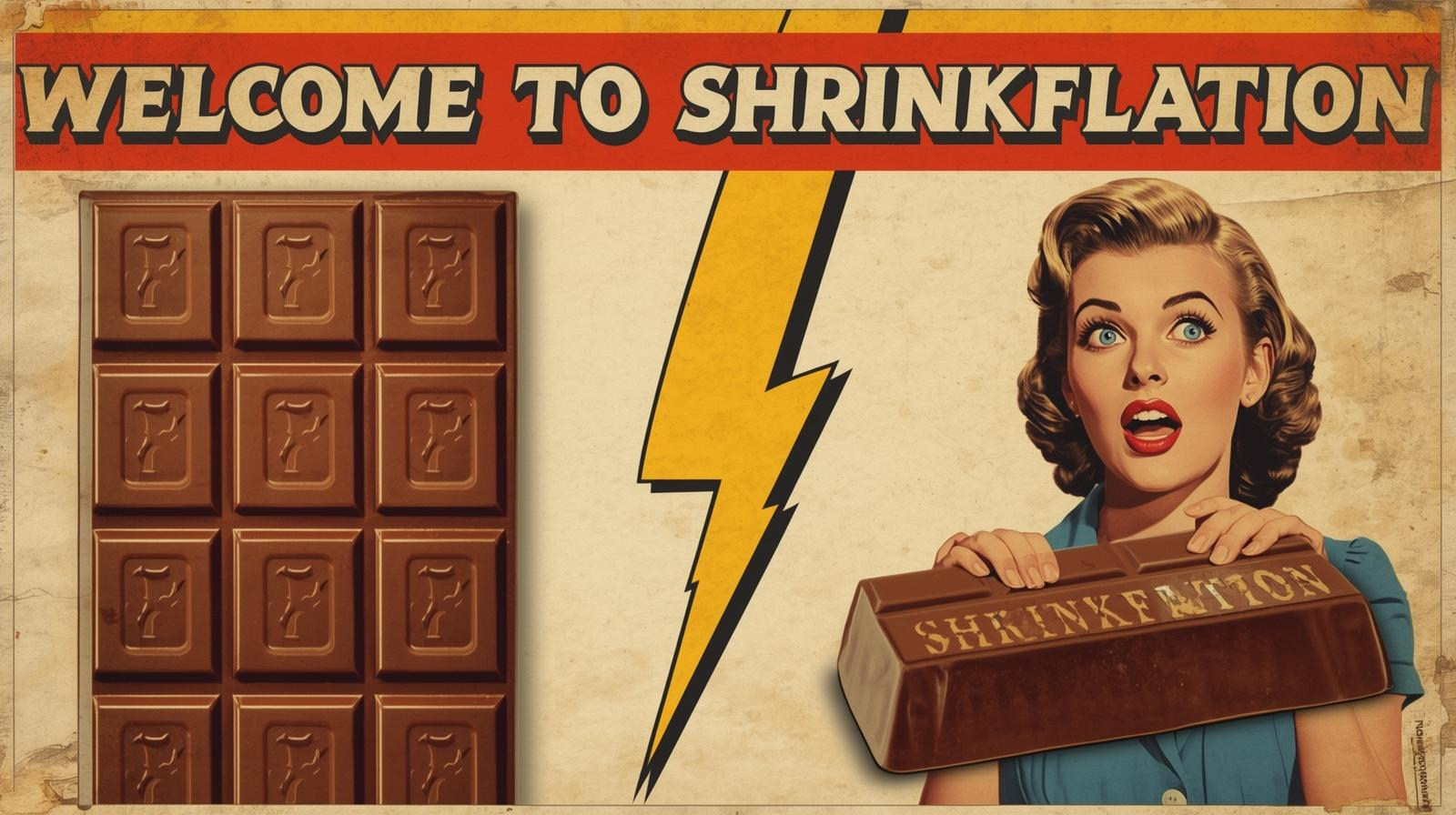
Something sneaky is happening in Europe’s supermarkets. The chocolate bar you’ve loved since childhood looks the same. The packaging still shouts “NEW RECIPE!” or “Now with 30% less sugar!” - but mysteriously, it also contains 30% less everything else. Welcome to shrinkflation, inflation’s quieter, better-dressed cousin.
The Disappearing Act
Shrinkflation is the magician of modern economics: prices stay the same, but portions shrink. Your pasta box has fewer grams, your yogurt less spoonfuls, and your chips seem to have taken up a hobby in minimalism. The number on the price tag doesn’t move, but your wallet feels the trick.
It’s inflation that whispers instead of shouts. And it’s spreading… from snacks to shampoo, from toilet paper to toothpaste. Even train tickets and energy tariffs now play along, wrapped in opaque pricing models so complicated they could double as IQ tests.
The Psychology of “It’s Fine”
Why don’t we notice? Because we don’t want to. Economists and psychologists agree that humans are much more sensitive to rising prices than to shrinking packages. A €1 chocolate bar suddenly costing €1.20 feels wrong. But if it stays €1 and quietly loses 20 grams, we shrug and move on.
It’s the economics of denial: a little deception that lets consumers feel like things aren’t getting worse while they very much are. The result? Europe’s inflation looks tamer on paper than it feels in people’s pockets.
The Corporate Tango
Companies insist they’re not fooling anyone - they’re “adjusting to market realities.” Translation: raw materials cost more, wages are up, energy is through the roof. Something has to give. And since consumers panic at visible price hikes, brands downsize instead.
They call it “right-sizing,” which sounds like a yoga pose but really means: we shrank it and hope you won’t notice.
Politicians play along too, because official inflation numbers - those tidy percentages you hear on the news - often don’t capture shrinkflation or the subtle downgrades in quality. So while statistics suggest Europe is “stabilizing,” your groceries disagree loudly at checkout.
The Hidden Costs of Silence
The danger isn’t just economic.. It’s social. When inflation hides behind fine print, trust erodes. People begin to feel gaslit by their own economies. “Am I imagining this, or did my orange juice just get smaller again?” becomes a common kitchen question.
And in a continent already balancing post-pandemic recovery, energy crises, and geopolitical tension, silent inflation quietly gnaws at confidence. Not dramatic enough to spark protests, just enough to make everyone a little more cynical.
Fighting Back with Awareness
So what can we do?
Pay attention.
Compare sizes, not just prices.
Support transparent brands.
Call out deceptive marketing.
And yes, occasionally choose the local bakery over the multinational muffin.
Because inflation isn’t just about money.
It’s about trust, perception, and power.
Europe’s inflation may be silent, but its message is loud:
the less we notice, the more we lose.