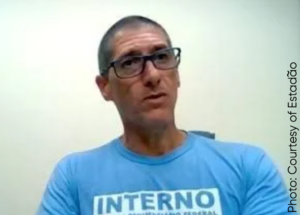
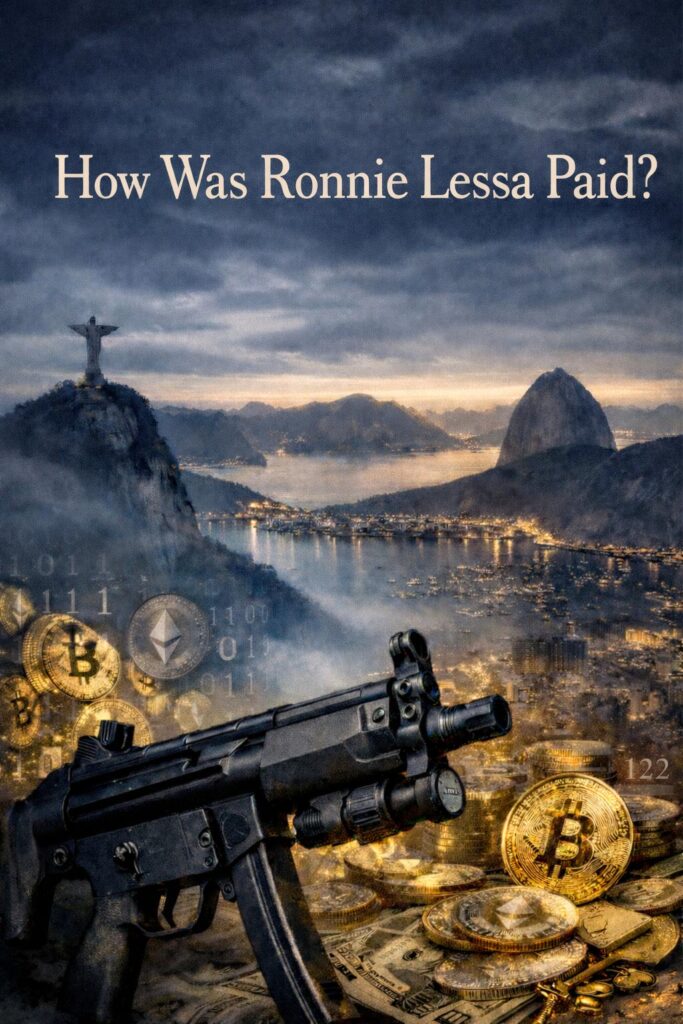
To date, there is no judicial proof regarding how Ronnie Lessa was paid for the murder of city councilor Marielle Franco and her driver, Anderson Gomes, in March 2018.
The crime took place in a context in which sophisticated mechanisms for concealing financial transactions—such as cryptocurrencies, offshore companies, and the use of intermediaries—are already widely employed by criminal organizations. In this scenario, investigators consulted over the years have pointed out that it is unlikely that an execution of such complexity would have been carried out without concrete guarantees of payment.
The case brings together elements that remain not fully clarified. The weapon used in the attack was identified as restricted-use, compatible with firearms employed by security forces. Ronnie Lessa, identified as the gunman, had previously served in state security institutions, which from the outset raised questions about the origin of the weapon and the possibility of diversion from official arsenals.
On the eve of the trial, two central issues remain unresolved and are considered decisive for the full elucidation of the crime:
1. Through what means did—or would—Ronnie Lessa receive payment for carrying out the execution?
2. From which official or unofficial stock did the weapon used in the assassination originate?
Concluding the case without objective answers to these points would leave significant gaps in the reconstruction of the facts.
The attack against Marielle Franco was not merely a homicide. The circumstances indicate planning, prior surveillance, and precise execution—characteristics that, according to public security specialists, are typically associated with crimes motivated by politics or with structured power disputes.
Over recent years, the escalation of political violence and the exposure of corruption schemes involving public officials have reinforced the interpretation that the assassination is part of a broader context of action by organized groups seeking territorial, economic, and institutional influence.
Answering these questions is not only a requirement of the judicial process, but an essential element for understanding the degree of infiltration of organized crime into state structures—and the risks this reality poses to democracy.
Editor’s Note: This article does not seek to establish criminal responsibility or to substitute judicial findings. It examines unresolved questions arising from publicly available information, witness testimony, and expert assessments, which could not be independently and fully verified by the editorial team.
The reporting does not present new allegations or draw definitive conclusions, but explains why key aspects of the case — including financial and logistical dimensions — remain unclear. The decision to publish follows careful editorial and legal consideration and reflects the view that these unanswered questions are of overriding public interest.