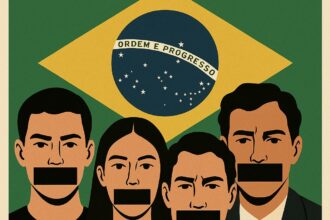
An institutional statement on threats against journalist Lauro Jardim, the public interest in the case, and Nokosphere’s core principles.

Nokosphere firmly repudiates the threats revealed against journalist Lauro Jardim and
publicly reaffirms one of its central principles:
– the defense of freedom of the press as a foundation of democracy,
– factual truth,
– and the public interest.
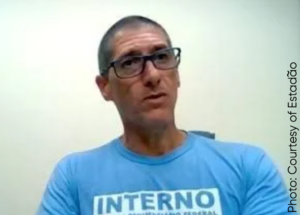
The case is serious. Messages attributed to Daniel Vorcaro became public in which journalist Lauro Jardim appears in a context of aggression and surveillance. The defense maintains that there was no intention to threaten journalists and that the content was taken out of context. That position must be preserved. But preserving due process does not mean minimizing the institutional gravity of what was revealed. When a journalist is mentioned in a context of violence because of his work, not only his individual safety is affected. What is affected is society’s right to free, critical, and independent information.
The information made public also indicates that the environment described would not be limited to a single target. News reports mention references to a staff member publicly identified as „Monique“ and to a chef, in a context that, at least on its face, suggests the existence of a broader pattern of pressure, surveillance, and intimidation. These mentions are not incidental. They are clearly relevant to the public interest because they help contextualize the seriousness of the scenario revealed and the breadth of the methods allegedly directed at
people considered inconvenient or harmful to the interests of the group under investigation.
For Nokosphere, this makes the episode even more serious. This is not merely about an alleged threat against a well-known journalist. It is about a factual setting that, at least in theory, affects different people and suggests a logic of intimidation incompatible with democracy, with freedom of the press, and with ordinary institutional life.
Nokosphere further notes that it is also investigating another Brazilian financial scandal of extreme gravity, in which there have also been, at least in theory, reports of coercion, intimidation of witnesses, and lethal incidents under investigation. This broadens the institutional concern. When complex financial crimes begin to coexist with fear, forced silence, and pressure on those who may contribute to the truth, the problem ceases to be merely economic or regulatory. It begins to directly affect justice, institutional security, and the democratic order itself.
For Nokosphere, freedom of the press is not an accessory value. It is not a favor, a concession, or an act of tolerance. It is an essential guarantee of any free society. Without a protected press, economic and political power is no longer effectively subjected to public scrutiny. Without journalists who are free to investigate and publish, democracy loses one of its most important instruments of oversight and self-correction.
That is also why serious reflection is required regarding the inertia – or the public perception of inertia – of regulatory and supervisory bodies in the face of grave warning signs that, when allowed to accumulate, may undermine public confidence. The guarantee of defensedoes not mean tolerance of intimidation. Legal prudence does not mean institutional silence. In a state governed by the rule of law, caution must walk side by side with the capacity to respond.
Nokosphere stands in solidarity with Lauro Jardim, with all journalists who continue working under pressure, with witnesses who face fear in order to help establish the truth, and with all citizens who refuse to normalize violence as an instrument of power.
Freedom of the press will not be intimidated.
Democracy is not negotiable.
And fear will never replace the right to inform.